We believe in the open and inclusive sharing of knowledge, and we warmly invite all interested participants to join us in this exchange of ideas and perspectives.
Participation is free, and you can attend directly without registration.
Workshop Title
Control Challenges from Quantum Hardware: Tutorials, Perspectives, and Open Problems
Workshop Overview
Realizing scalable and reliable quantum hardware remains one of the central challenges in the development of quantum technologies. Experimental platforms such as superconducting circuits, trapped atoms, and solid-state spin systems require an intricate interplay of physics, engineering, and, crucially, advanced methods from control, estimation, and learning to mitigate noise, stabilize dynamics, and enable high-fidelity operations.
This tutorial-oriented workshop aims to make key experimental platforms accessible to researchers from outside hardware-focused domains, with a particular emphasis on the role of control-theoretic and data-driven methods. The program brings together leading experts who will introduce state-of-the-art implementations across several platforms, including nitrogen-vacancy (NV) centers with a focus on measurement and learning, superconducting circuits and bosonic (cat) qubits with an emphasis on protection mechanisms, as well as neutral-atom systems.
Beyond providing an overview of experimental capabilities, the workshop will highlight open challenges where the control, learning, and estimation communities can make impactful contributions. By bridging the gap between experimental quantum hardware and systems-theoretic methodologies, the workshop aims to stimulate interdisciplinary exchange and foster new research directions at the interface of quantum technologies and control.
The workshop will consist of four keynote presentations followed by a panel discussion.
Workshop Format
4 Keynote Talks
Panel Discussion
Interactive Q&A
Workshop Venue
The workshop will take place at CREATE, Aalborg University, room 3.107, Rendsburggade 14, 9000 Aalborg, Denmark.
Speakers
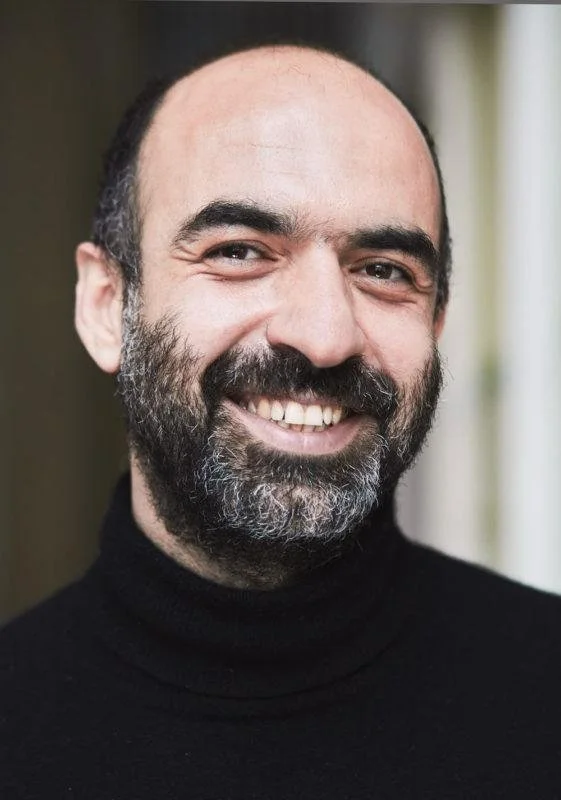
Mazyar Mirrahimi, Inria Paris
Tentative title: Quantum computing hardware: cost of fault-tolerance
Abstract: The remarkable progress in control and readout of atomic and solid-state qubits has led to an accelerated race towards building a useful quantum computer. A portion of the recent developments deal with noisy quantum bits and aim at proving an advantage with respect to classical processors. However, in order to fully exploit the power of quantum physics in computation, developing fault-tolerant processors is unavoidable. In such a processor, quantum bits and logical gates are dynamically and continuously protected against noise by means of quantum error correction. While a theory of quantum error correction has existed and developed since mid 1990s, the first experiments are being currently investigated in the physics labs around the world. I will review the main approach pursued in this direction and state of progress towards error corrected qubits. I will also present some shortcut approaches that are pursued to reduce the significant hardware overhead of error correction.
Short bio: Mazyar Mirrahimi graduated from Ecole Polytechnique, France, in 2003, and from Mines Paristech with a PhD on Applied Mathematics and Control Theory in 2005. He is a director of research at Inria Paris, part-time professor at Ecole Polytechnique, and a member of the scientific board of startup Alice&Bob. He is the leader of Quantic research team (https://quantic.phys.ens.fr), a joint team between Inria, Ecole Normale Supérieure, Mines Paristech and CNRS, formed by experimental and theoretical physicists and applied mathematicians. His current research interests include quantum control, quantum error correction and fault-tolerance, quantum reservoir engineering, quantum superconducting circuits, quantum nonlinear dynamics. In the past he has also worked on geometric nonlinear control, dynamical systems, stochastic systems and their stabilization, partial differential equations and their control, inverse problems. From 2011 to 2019, he also held a visiting scientist position at the Applied Physics Department of Yale University, collaborating with the teams of Michel Devoret and Robert Schoelkopf. Through these collaborations, he contributed to the design and analysis of various experiments on quantum error correction, quantum feedback control and quantum reservoir/dissipation engineering with superconducting circuits.
Cristian Bonato, Heriot-Watt University
Tentative title: Quantum sensing with single spins: optimal pulse sequence design and information extraction
Abstract: Single spins associated with nitrogen-vacancy (NV) centres in diamond represent one of the most mature and versatile platforms for quantum sensing, with applications ranging from nanoscale materials characterisation to healthcare. In this talk, I will present recent advances in the design of optimised pulse sequences and the emergence of “smart” spin-based quantum sensors that can autonomously adapt to take the most informative measurements. Building on my group’s work, I will focus on real-time Bayesian approaches that enable online parameter estimation and adaptive control, allowing the sensor to self-optimise and operate at maximal sensitivity under realistic conditions. These developments open the way to deployable, high-performance quantum sensors that move beyond expert-driven operation towards robust, data-driven autonomy.
Short bio: Cristian Bonato is a Professor at Heriot-Watt University (Edinburgh, UK), where he leads research on spin-based quantum technology for quantum communication and sensing. At Heriot-Watt University, he manages the "Nanoscale Quantum Sensing" facility, which deploys scanning single-spin quantum sensing to the study of condensed matter physics problems. He is a co-investigator in the UK "Quantum sensing hub for biomedical research" (Q-BIOMED) and a member of the senior management team.Prof Bonato has been awarded a MSc in Physics (2004) and a PhD in Electrical Engineering (2008), both from the University of Padova (Italy), and held post-doctoral positions in Leiden (NL) and Delft (NL) before joining Heriot-Watt University in 2016.
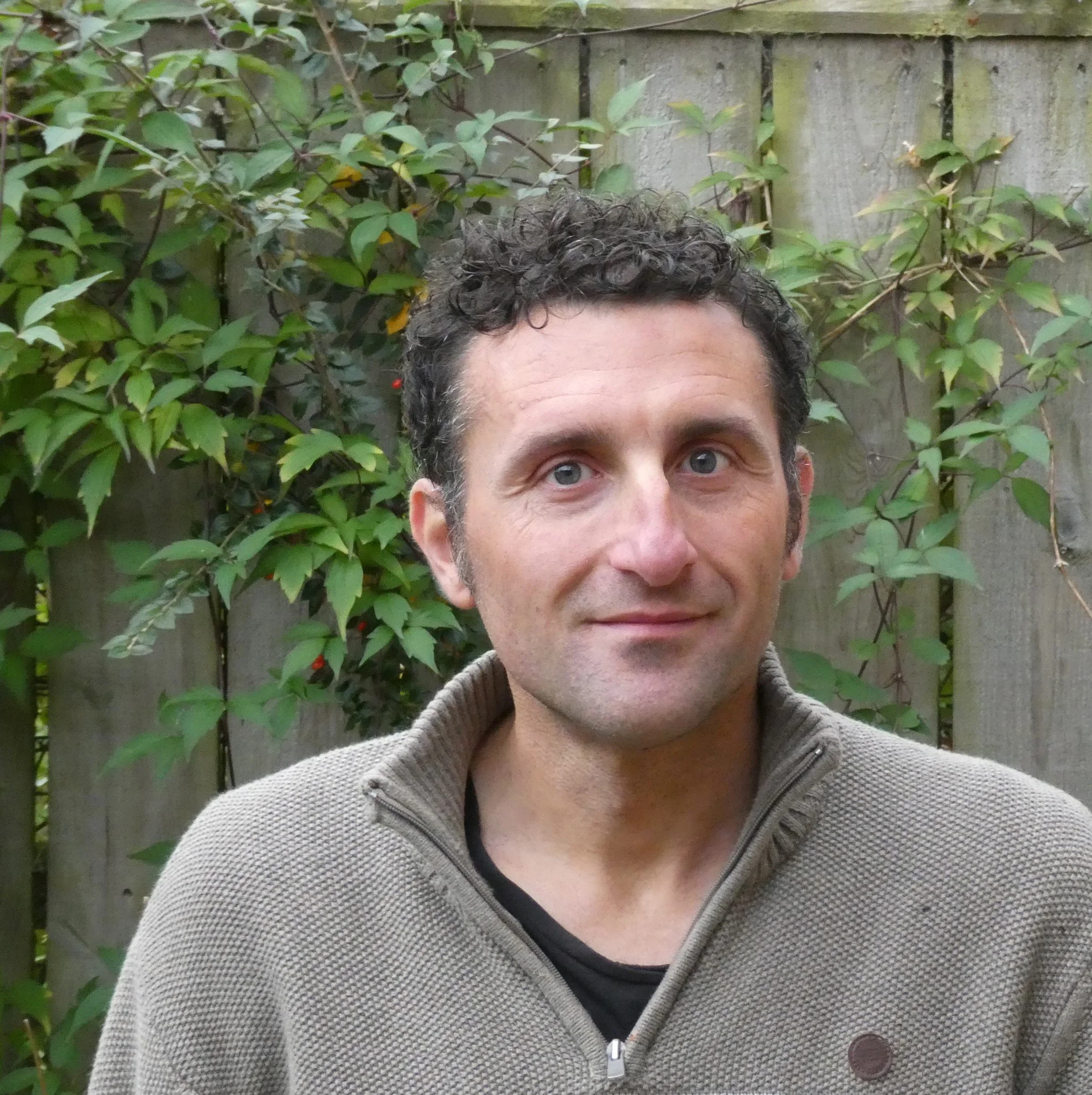
Kim Splittorff, Niels Bohr Institute
Tentative title: The NNF Quantum Computing Programme
Abstract: The mission of the NNF Quantum Computing Programme is to enable the development of fault tolerant quantum computing hardware and quantum algorithms that solve life-science relevant chemical and biological problems. In this talk I will describe how we approach this goal and the central interplay between the NNF Quantum Computing Programme and Quantum Foundry Copenhagen.
Short bio: Kim Splittorff is Associate Professor at the Niels Bohr Institute and Head of the Section for Quantum Information Science and Technology, which hosts the Novo Nordisk Foundation Quantum Computing Programme. He contributes to the programme through both research and leadership, including as head of its Education and Workforce Development unit. A long-time member of the Niels Bohr Institute, he has developed mathematical tools that enable the study of quantum systems, new quantum algorithms and a more intuitive way to understand how quantum computing works. He has been part of the Institute’s management team and is leading the establishment of a large-scale Quantum Training Lab at the Niels Bohr Institute.
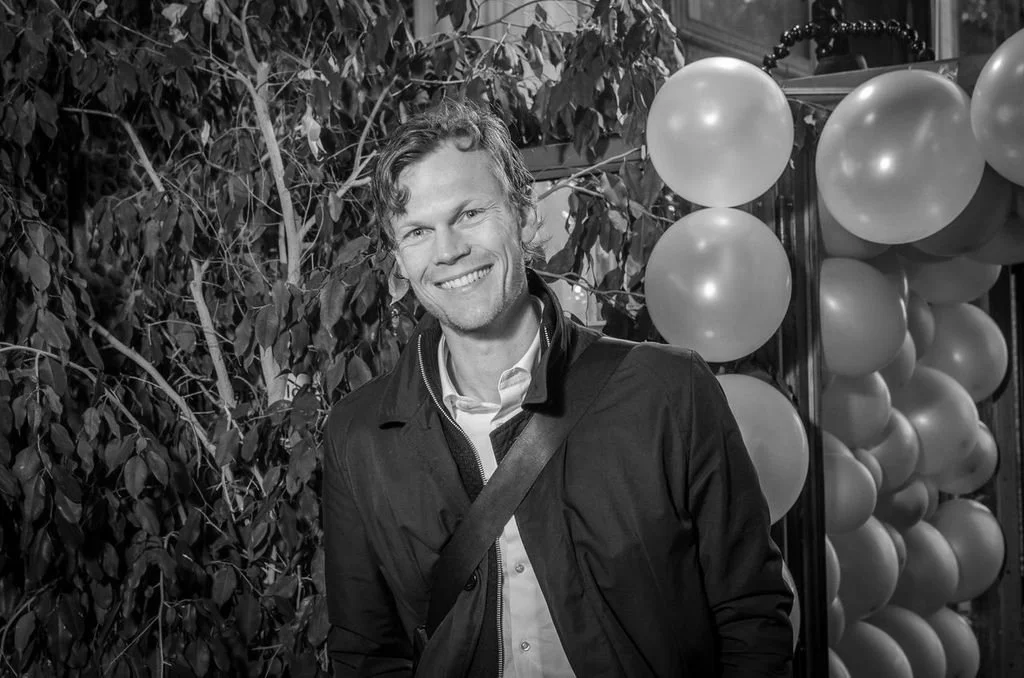
Antoine Cornillot, Pasqal
Tentative title: Pasqal Neutral-Atom QPUs: From programing pulses to solving applications
Abstract: This tutorial introduces Pasqal’s neutral-atom quantum processors from the perspective of how researchers can access and program them. I will present Pulser, Pasqal’s open-source package to program and simulate neutral-atom arrays at the pulse level, and Qoolqit, an open-source toolkit supporting algorithm development in the Rydberg Analog Model. I will then explain how users can run programs on Pasqal QPUs, either via cloud access or through HPC deployments such as at CEA and illustrate the workflow for executing jobs on real hardware. To make the discussion concrete, I will walk through an application example such as formulating and solving a QUBO problem. I will conclude with open challenges and research opportunities connecting neutral-atom quantum computing with control, estimation, and learning, and perspectives towards digital quantum computing and quantum simulation.
Short bio: Antoine Cornillot is a Quantum Engineer in Pasqal’s Programming and Compilation team. He joined Pasqal in 2023 after an MSc in Physics from Université Paris-Saclay and a MEng in Quantum Engineering from CentraleSupélec. He is one of the main developers of Pulser, an open-source package for pulse-level programming of neutral-atom arrays. Antoine has also worked on integrating Pasqal’s first QPUs into HPC environments (CEA and the Jülich Supercomputing Center), with contributions ranging from user interfaces to hardware control— including laser-pulse control and efforts supporting the scaling of Pasqal devices. His current work focuses on digital quantum computing with neutral atoms, connecting low-level control to running applications and error-correcting codes.